


Blog
High Efficiency Furnace vs Standard Furnace: What System Is Most Efficient?
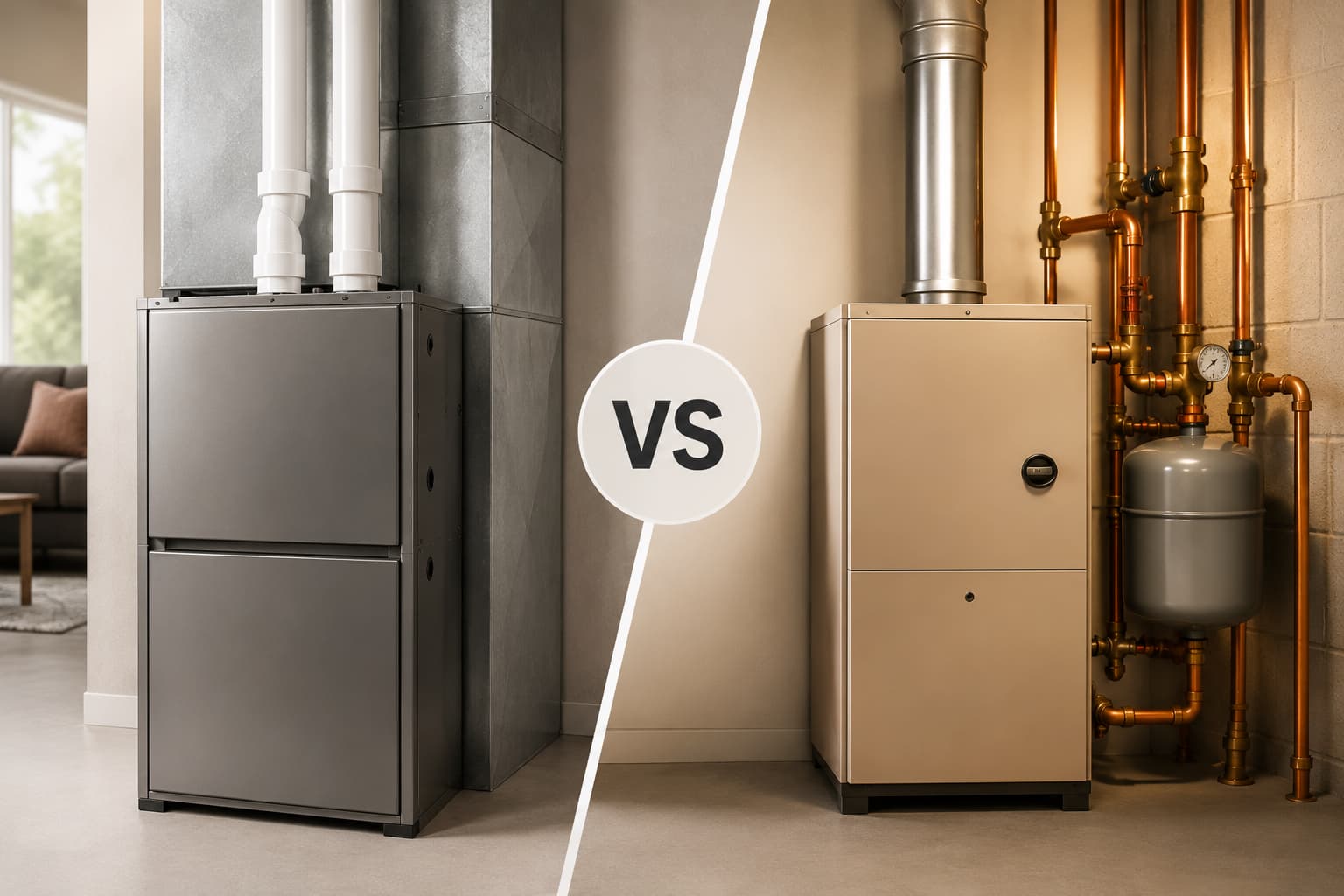
Choosing between a high efficiency furnace vs standard model starts with understanding how each system uses fuel. Higher-efficiency furnaces convert more fuel into usable heat, lowering energy consumption during Syracuse's long winters. Standard furnaces cost less to install, but they lose more heat through the exhaust. Understanding how each system works makes it easier to choose the right heating equipment for your home.
High Efficiency Furnace vs Standard: What's the Difference?
The biggest difference between a high efficiency gas furnace vs standard furnace is the Annual Fuel Utilization Efficiency (AFUE) rating.
A standard furnace generally has an AFUE between 80% and 83%, meaning some heat leaves the home through the vent system.
High-efficiency furnaces typically have AFUE ratings of 90% or higher. They use a secondary heat exchanger to capture additional heat before it leaves the system, allowing more of the fuel you purchase to heat your home.
Because Syracuse experiences long heating seasons, higher AFUE ratings can make a noticeable difference in annual fuel consumption.
Typical Heating System Efficiency
Standard Furnace
80–83% AFUE
High-Efficiency Furnace
90–98% AFUE
Modern Boiler
85–95%+ AFUE
Higher AFUE ratings mean more of the fuel you purchase is converted into usable heat, helping reduce heating costs during Syracuse's long winter season.
Understanding Furnaces and Understanding Boilers
How a Furnace Heats Your Home
A furnace burns natural gas or propane to create heat, then a blower moves warmed air through ductwork into each room.
Modern furnaces are available with variable-speed blowers and multi-stage burners that maintain steadier indoor temperatures while using less energy than older equipment.
How a Boiler Heats Your Home
A boiler heats water instead of air. Hot water or steam moves through pipes to radiators, baseboard heaters, or radiant floor systems.
Unlike a furnace, a boiler does not rely on ductwork to distribute heat throughout the home.
Many older Syracuse homes still use boilers because they were commonly installed before forced-air systems became widespread.
Furnace vs Boiler: Which Is More Efficient?
When comparing furnace vs boiler, efficiency depends on the equipment being installed instead of the heating method alone.
Modern high-efficiency furnaces and high-efficiency boilers both use significantly less fuel than older systems.
The larger difference comes from how they deliver heat.
- Furnaces heat the air and distribute it through ductwork.
- Boilers circulate hot water or steam through pipes.
- Furnaces respond quickly to thermostat changes.
- Boilers provide slower, steadier heat.
The best choice depends on your home's existing heating system, renovation plans, and long-term goals.
Pros and Cons of a High-Efficiency Furnace
Benefits
High-efficiency furnaces offer several advantages:
- Lower heating bills
- Higher AFUE ratings
- Improved temperature consistency
- Variable-speed blower options
- Sealed combustion for improved efficiency
Long heating seasons across Central New York allow homeowners to benefit from those efficiency improvements year after year.
Drawbacks
Higher-efficiency equipment also has considerations.
The purchase price is higher than a standard furnace and installing high efficiency gas furnace equipment may require PVC venting, condensate drainage, or other modifications depending on the existing system.
The additional components also make annual furnace tune up service an important part of maintaining peak efficiency.
Advantages of a Standard Furnace
Standard furnaces remain a practical option for some homes.
Benefits include:
- Lower initial purchase price
- Simpler venting requirements
- Familiar equipment for many replacement projects
The tradeoff is higher fuel consumption over the life of the equipment compared with a high-efficiency model.
Cost, Energy Savings, and Payback Time
The payback period depends on installation cost, annual fuel usage, and local utility rates.
Homes that use large amounts of natural gas during Syracuse winters generally recover the additional cost of a high-efficiency furnace sooner than homes with shorter heating seasons.
Manufacturer promotions, utility rebates, and available tax incentives can also shorten the payback period.
If you're comparing equipment options, our guide covering the cost to install high efficiency furnace explains the factors that influence total installation cost.
Installing a High-Efficiency Gas Furnace
Before installation begins, the existing ductwork, venting, gas piping, and electrical connections are inspected for compatibility with the new equipment.
A high-efficiency furnace also requires condensate drainage and approved vent materials that differ from many standard furnaces.
If you're preparing for a replacement, our article on how to select a heating contractor for high-efficiency furnace installation explains what to look for before choosing an installer.
Homeowners ready to replace aging equipment should schedule our furnace installation service for a professional evaluation and system recommendation.
Furnace Maintenance and Boiler Maintenance
Both furnaces and boilers require annual maintenance to continue operating efficiently.
Routine inspections identify worn components, verify safe operation, and keep the heating system prepared for another Syracuse winter.
Our furnace tune up service includes cleaning, safety inspections, airflow testing, and performance checks for forced-air systems.
Boilers require annual inspections of burners, controls, pumps, expansion tanks, relief valves, and hot water or steam components. Routine maintenance keeps the system operating efficiently throughout Syracuse winters.
If your heating system develops a problem during the season, our heating furnace repair services will restore operation before a minor issue grows into a larger repair.
Schedule online or call (315) 220-0960 today to discuss the best heating system for your Syracuse home with Cooney Air Conditioning & Heating.
Frequently Asked Questions
In Syracuse, NY, a high efficiency furnace is often worth the investment because long winters increase heating demand and energy use. Compared to a standard furnace or even a boiler, high efficiency heating systems convert more gas into heated air, improving energy efficiency and lowering monthly energy bills. When evaluating furnace vs boiler or high efficiency furnace vs standard options, consider total system performance, maintenance needs, and long-term energy savings. Cooney Air Conditioning & Heating can assess your current HVAC system and recommend the best solution for your home.
A furnace heats air and distributes it through ducts, while a boiler uses hot water or steam for radiant heating systems. In a furnace vs boiler comparison, boilers can provide even heating but may have different maintenance requirements. When reviewing high efficiency furnace vs standard models, the key advantage is improved energy efficiency and better energy use from gas or propane. Both systems can be effective, but the right heating system for your Syracuse home depends on comfort preferences, existing infrastructure, and energy goals. Cooney Air Conditioning & Heating provides expert guidance and services for both.
The payback period for a high efficiency gas furnace vs standard typically ranges from 3 to 7 years, depending on energy costs, heating demand, and system efficiency. Because high efficiency systems use less energy to produce heated air, homeowners often see noticeable savings on heating bills. Compared to a boiler or older furnace, the improved energy efficiency and reduced gas consumption shorten the return on investment. In Syracuse, NY, Cooney Air Conditioning & Heating can calculate estimated energy savings and help you choose the most cost-effective HVAC system.
A high efficiency furnace does not necessarily require more maintenance, but it does benefit from regular professional service to maintain peak efficiency. Like any heating system—whether furnace vs boiler—annual maintenance ensures safe gas combustion, proper airflow, and optimal energy performance. High efficiency systems may include condensate drains and advanced components that should be inspected. Routine HVAC maintenance in Syracuse, NY from Cooney Air Conditioning & Heating helps protect your energy efficiency, extend system lifespan, and prevent costly heating repairs.