


Blog
Can My Electrical Panel Handle An EV Charger In New York?
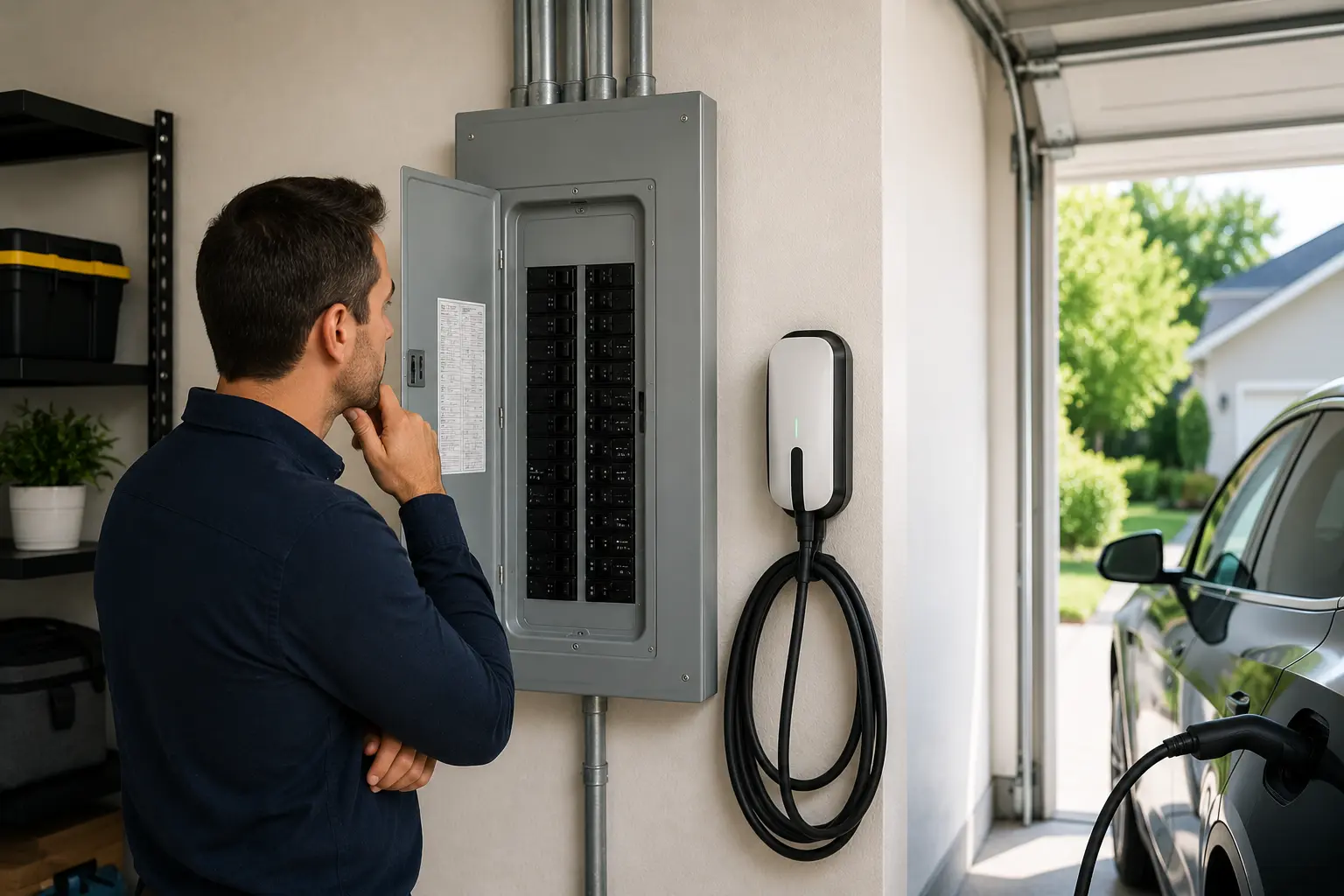
Your electrical panel has room for an EV charger when the service has enough capacity for the added charging load and the required circuit. A 200-amp service gives you greater available capacity, but a 100-amp service does not automatically need an upgrade. We calculate the home's existing electrical load before making that call.
Why Electrical Panel Capacity Matters For EV Charging At Home
An EV charger draws power for hours at a time while the vehicle is charging. That sustained load has to fit alongside the electricity already being used by your HVAC system, water heater, range, dryer, and other equipment.
Breaker space and electrical capacity are not the same thing. An open space in the panel gives you a place for a breaker, but it does not tell you how much additional load the electrical service will support.
Level 1 charging uses a 120-volt connection and charges at a slower rate. Level 2 charging uses a dedicated 240-volt circuit and charges faster. The circuit size has to match the charger being installed. Before EV charger installation, we look at the charger requirements and the electrical system that will supply it.
If a project requires a new receptacle rather than hardwired equipment, electrical outlet installation needs to match the charger and circuit requirements.
Home Electrical Panel Requirements For EV Charging
We start with the service rating and the electrical load already in the house. Large electric equipment such as central air, heat pumps, water heaters, ranges, dryers, and hot tubs all use part of the available capacity.
The charger adds another load. Our electrician calculates the existing demand along with the charger requirements to see what the service supports.
We inspect the panel for damaged breakers, outdated equipment, poor connections, and other electrical problems. If we find damaged wiring, breakers, or problems outside the charging circuit, that work falls under our residential electrical services.
How To Check Your Electrical Capacity And Available Amps
You do not need to remove the panel cover or work around energized wiring to gather basic information. Look for the service or panel rating that is visible without opening electrical equipment and make a list of the major electric equipment already in the house.
You will also need the electrical requirements for the charger you plan to install. Level 2 chargers come in different sizes, so there is no single circuit requirement that applies to every unit.
An electrician uses that information to perform the load calculation. That calculation tells us if the existing electrical service has room for the charger without guessing from the main-breaker rating or the number of empty spaces in the panel.
When A Sub Panel For EV Charger Makes Sense
A subpanel adds circuit space. It does not increase the amount of electrical service coming into the house.
If the existing service has enough capacity for the charger but the main panel does not have room for the required circuit, a subpanel gives the electrical system additional breaker spaces.
If the house is already using the available service capacity, adding a subpanel does not create additional amps. The service itself needs to be addressed before adding the charging load.
Do You Need An EV Charger Panel Upgrade?
An EV charger panel upgrade is needed when the existing electrical equipment or service does not support the charging circuit being added. The work ranges from replacing an outdated panel to increasing the home's electrical service.
With electrical panel upgrades, we look at the calculated load, existing service size, panel condition, charger requirements, and any meter or service equipment that needs to change.
Permit, inspection, and utility requirements vary with the work being completed and the location of the property. Cooney Air Conditioning & Heating accounts for those requirements when planning the installation.
Benefits Of An Electrical Panel Upgrade For Long-Term Charging Needs
If the calculated load shows that the house needs additional service capacity, an upgrade gives the electrical system room for the EV charger and other planned loads. The added capacity also leaves room for planned equipment such as another EV charger or electric HVAC system.
Older Syracuse homes around Eastwood and Strathmore need a close look at the existing electrical service before a large new load is added. The service rating, panel condition, and calculated load tell us what that house needs.
Syracuse winter storms and power disturbances are another concern for homes with sensitive electronics and connected equipment. Whole house surge protection adds protection at the electrical system level against damaging voltage spikes.
If you are planning an EV charger in Syracuse, DeWitt, East Syracuse, or a nearby community, Cooney Air Conditioning & Heating will check the service capacity, panel, and charger requirements before the electrical work begins.
Frequently Asked Questions
If you are wondering, “can my electrical panel handle an ev charger,” start by checking your panel’s amp rating and available capacity. Most Level 2 charger installation projects require a 240-volt circuit and 40 to 60 amps. A licensed electrical contractor in New York, like Cooney Air Conditioning & Heating, can perform a load calculation to determine whether your electrical panel has enough capacity or needs a panel upgrade.
Not always. Some New York homes already have a 200-amp electrical service with enough panel capacity for an EV charger. However, if your panel is 100 amps or heavily loaded, a panel upgrade may be necessary to safely handle the additional electrical load. Cooney Air Conditioning & Heating can inspect your electrical panel and recommend the safest installation option.
Most Level 2 EV charger installations require a dedicated 240-volt circuit rated for 40 to 60 amps, depending on the charger level and manufacturer specifications. Your electrical panel must have sufficient capacity and breaker space to support this circuit. In New York, Cooney Air Conditioning & Heating ensures every charger installation meets electrical code and panel requirements.
You may be able to install an EV charger on a 100-amp electrical panel, but it depends on your home’s total electrical load and available capacity. Many 100-amp panels in New York are already near their limit, which can make a panel upgrade necessary for safe charging. Cooney Air Conditioning & Heating can evaluate your panel, amps, and circuit capacity to determine the best solution.
An EV charger electrical panel upgrade typically takes one full day for installation, though scheduling and utility coordination in New York can extend the timeline. The process includes replacing the existing panel, upgrading service amps if needed, and ensuring the new electrical panel supports your EV charging requirements. Cooney Air Conditioning & Heating manages the entire upgrade and inspection process for homeowners.
If you are asking, “can my electrical panel handle an ev charger,” contact a licensed electrical professional in New York. Cooney Air Conditioning & Heating provides panel inspections, load calculations, charger installation, and panel upgrade services to ensure your electrical system has the capacity and service rating needed for safe, reliable EV charging at home.